


Public Panel | Community Responses to Antisemitism and anti-Muslim Racism
Published September 15, 2026

13–15 October 2026 | London, United Kingdom
Jewish communities and practitioners have developed substantial expertise in responding to antisemitism. Whether institutions make use of that expertise when policies are designed, funded and evaluated remains a different question. This was a central concern of EPNA’s autumn workshop in London: how to translate experience from schools, community organisations, research and advocacy into political decisions, with clear responsibilities for their implementation.
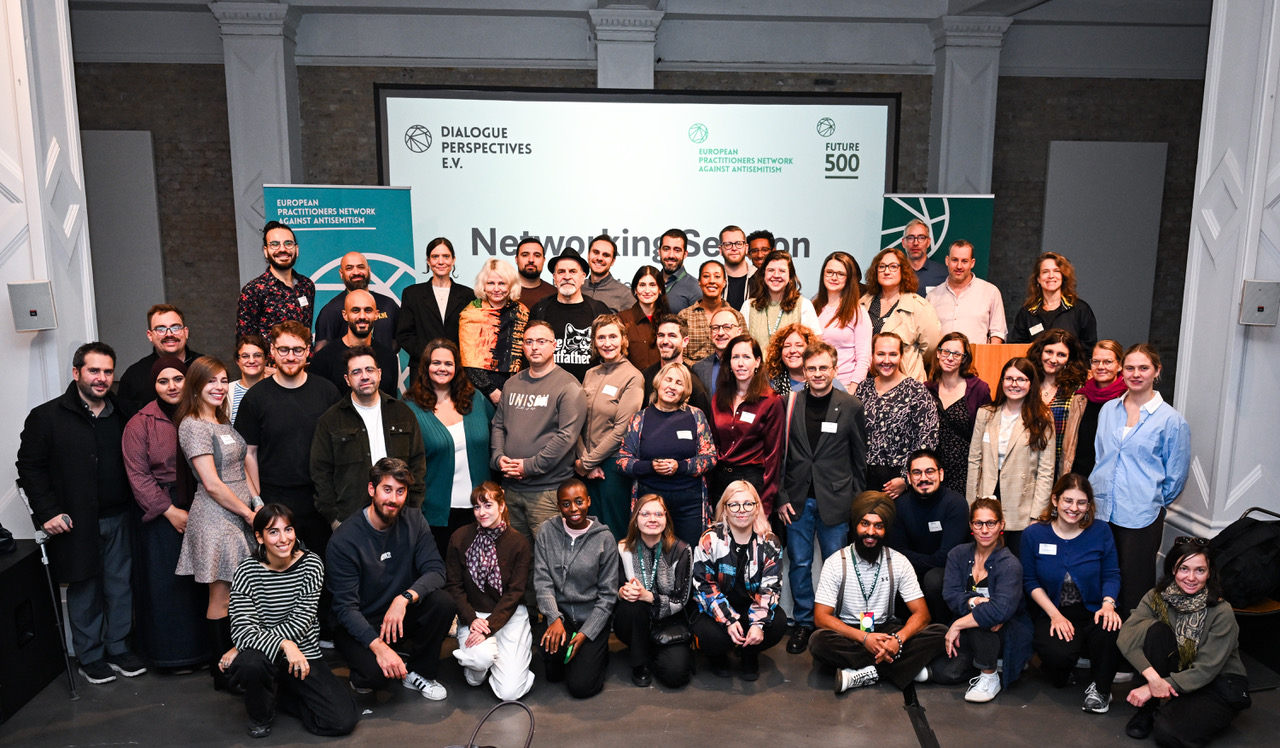

From 13 to 15 October 2026, 40 practitioners from 15 countries examined four draft policy briefs developed by EPNA’s Working Groups. Building on discussions in Barcelona and Brussels, they addressed Holocaust education, antisemitism in schools and universities, the intersections of antisemitism with other forms of discrimination and ideology, and online antisemitism. The workshop combined work on the recommendations with exchanges about British approaches to community protection and institutional cooperation. In the first half of 2026, the Community Security Trust (CST) recorded nearly twice as many antisemitic incidents per month in the UK as in the six months preceding 7 October 2023.


A visit to CST made the practical demands of protection visible. Jonny Newton, the Director of External Relations within the CST, described how the organisation combines threat intelligence, security training, support for victims and cooperation with the police, drawing on trained volunteers and established community relationships. He also introduced the heads of CST’s departments and explained that the organisation has grown significantly since 7 October, as protecting Jewish life in the UK has become an even more urgent and ongoing priority. With the Security Advice for Everyone (SAFE) program CST also shares security expertise with other minority communities, including Muslim and Sikh communities. The example raised a question extending beyond security provision: which relationships and resources enable communities to act, and who is responsible for sustaining them? The following day, during an evening panel discussion featuring a distinguished lineup of speakers, the participants again had the opportunity to discuss these questions with the director of the SAFE program.
Marina Chernivsky (OFEK) approached this question through a critical discussion of resilience. Drawing on histories of minority emancipation and activism, participants considered how communities sustain collective action under pressure, a question that has gained urgency for Jewish communities across Europe and beyond since 7 October. Resilience cannot simply be expected of communities as a quality they demonstrate; it depends on the resources, protections and institutional conditions available to them, and these differ considerably across European contexts.


Our policy roundtable brought the Working Groups’ recommendations into direct discussion with institutional perspectives. Moderated by Limor Simhony Philpott (Antisemitism Policy Trust), it included Stephanie Goldberg of the GLA Jewish Staff Network, speaking in a personal capacity, and Oliver Levinson of the Mayor’s Office for Policing and Crime (MOPAC). Participants pressed for defined institutional responsibilities, sustained funding and a role for practitioners in policy development, implementation and evaluation.
The discussion also tested the assumptions behind existing approaches. One Working Group argued that “Holocaust education by itself is not antisemitism prevention”: teaching about the Holocaust and addressing contemporary antisemitism require related but distinct forms of work. Others examined how the fight against antisemitism can be instrumentalised to promote racist narratives, while antisemitism may be minimised within anti-racist movements. The group working on intersections of discrimination questioned funding structures that isolate communities and make cooperation more difficult. EPNA will incorporate feedback from the roundtable before circulating revised policy briefs to international stakeholders and decision-makers.


The public panel Community Responses to Antisemitism and Anti-Muslim Racism, organised with Future 500 at Whitechapel Gallery, extended these questions beyond the workshop. Around 90 people from both networks and the wider community attended. Moderated by Mohammed Ali Amla (Solutions Not Sides), the discussion brought together Iman Atta (TELL MAMA/Faith Matters), Julie Siddiqi (Together Coalition), Zachary Schaffer (co-founder of Project Shema) and a representative of CST.
The panel examined what cooperation between Jewish and Muslim communities requires when political conflict also shapes the relationships between them. Participants discussed the distinct histories and manifestations of antisemitism and anti-Muslim racism, and the dangers of treating them either as interchangeable or as competing claims to protection. They challenged both the instrumentalisation of opposition to antisemitism to legitimise anti-Muslim racism and the use of anti-racism to minimise antisemitism. Sustained cooperation requires relationships and institutional support that extend beyond individual events.


At German House, the former East German embassy, EPNA members and other invited guests met German Ambassador Susanne Baumann for an informal exchange, joined by representatives of several British civil society organisations. The practitioners outlined the diverse challenges of countering antisemitism in their respective European contexts and underlined the need for clear European strategies that respond to current societal developments, work that depends on reliable, long-term support at the political, legislative and financial level. Ambassador Baumann emphasised the importance of international cooperation for democratic resilience and of continuing to treat the fight against antisemitism as a European priority, with the resources this requires.


The workshop yielded three immediate results. The four policy briefs received feedback from practitioners and institutional interlocutors ahead of revision. The exchanges with CST and OFEK connected political recommendations to practical questions of security, organisational capacity and support. The joint public event with Future 500 brought organisations working in related but often institutionally separate fields into conversation about the conditions of cooperation. None of these exchanges, by itself, establishes policy impact; they clarify the work that must follow.
Schools and universities need the capacity to recognise contemporary antisemitism as well as to teach about the Holocaust. Funders need to make cooperation across communities possible without forcing organisations to compete for recognition or support. Civil society organisations must also examine antisemitism and racism within their own structures and alliances, including where doing so challenges established political loyalties.


EPNA’s next task is to turn the revised recommendations into sustained engagement with decision-makers and to examine whether they inform institutional practice. The relevant measure is not how many commitments are voiced, but whether those affected receive meaningful protection, practitioners can shape decisions, and cooperation remains possible under political pressure.


